
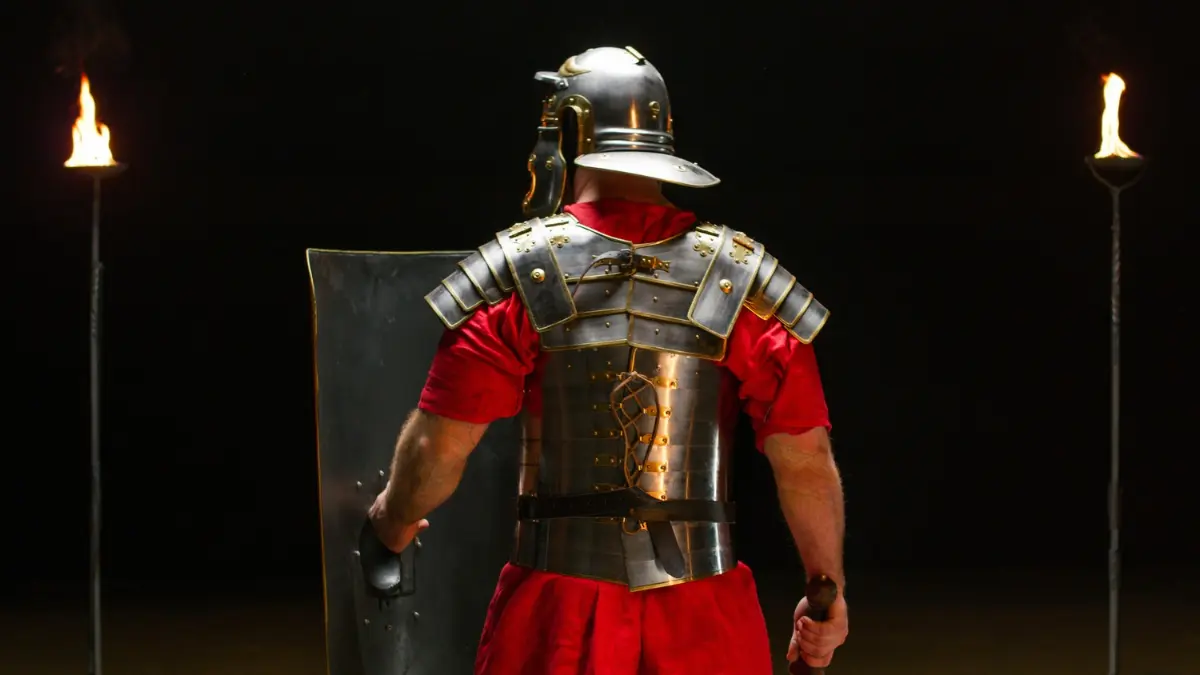

How do you actually put on the armor of God?
Paul tells Christians in Ephesians 6:11 to “put on the whole armor of God.” But what does that look like on an ordinary Tuesday?
Putting on the armor of God is not simply an intellectual exercise. It is not enough to know that Paul mentions truth, righteousness, faith, salvation, the gospel, and the Word of God. We put on the armor by actively walking in those truths.
In practical terms, that means practicing the spiritual disciplines that help us know God, trust Him, and obey what He has said.
Start with God’s Word
Paul describes the Word of God as “the sword of the Spirit” in Ephesians 6:17. Most of the armor in Ephesians 6 is defensive, equipping a Christian to stand against the enemy’s attacks. The sword is the one piece that is clearly pictured as a weapon, which makes knowing Scripture essential.
We read the Bible, study it, listen to it, memorize it, talk about it with other believers, and most importantly, apply it. Jesus told His disciples in John 13:17, “If you know these things, blessed are you if you do them.” Knowing biblical truth is important, but living according to biblical truth is where that knowledge begins shaping us.
The enemy does not wait to tempt us until we have a Bible open in front of us. Temptation often comes in quiet moments, lonely moments, frustrating moments, or moments when we are exhausted. We need God’s Word stored in our hearts before those moments arrive.
Prayer is part of the armor too
The passage does not simply end with the sword. Immediately afterward, Paul tells believers to be “praying at all times in the Spirit” (Ephesians 6:18). Prayer is not an optional addition to spiritual warfare.
Knowing how to pray matters, but there is a difference between knowing about prayer and actually praying. Prayer is where we bring temptation, fear, confusion, sin, relationships, decisions, and needs before the Lord. We acknowledge that our strength is insufficient and that we need God.
Putting on the armor means becoming a person who actually prays.
You need other Christians
Spiritual warfare was never intended to be fought alone. The New Testament repeatedly tells believers to encourage one another, bear one another’s burdens, confess sin, pray for one another, and stir one another toward faithfulness.
We need Christian friends who know us well enough to recognize when we are struggling. We need people who can remind us of truth when we have forgotten it and people we could call at 2:00 in the morning when life falls apart.
That kind of community does not happen accidentally. It grows when we intentionally build relationships with other believers. For many Christians, one practical step toward putting on the armor of God may simply be getting more connected to Christian community.
Worship shapes the way we see our lives
Worship is another important spiritual discipline. Christians gather with the church to worship, but worship is not confined to a Sunday service. We worship throughout the week as we give God praise, practice gratitude, surrender our plans, and recognize His goodness.
That matters in spiritual warfare because worship shifts our attention. The enemy wants our circumstances to become larger than our view of God. Worship reminds us who God is.
Putting on the armor happens in ordinary life
It can be tempting to make spiritual warfare mysterious, but Paul’s instructions are actually very practical. Know the truth. Walk in righteousness. Trust God. Remember your salvation. Know the gospel. Learn Scripture. Pray. Do all of this alongside God’s people.
Putting on the armor of God means walking out our faith in simple, everyday situations. It happens when you open your Bible before the crisis arrives, when you pray instead of simply worrying, when you confess sin rather than hiding it, and when another Christian reminds you of the gospel. It happens when temptation comes and you choose obedience.
The armor of God is not simply something Christians learn about. It is something we put on.
This question was discussed on Episode 1 of the Greater Than Sunday podcast from Immanuel Baptist Church.